 By
By If there is any sport that tests the mental faculties of a person to the very max, it’s chess. The game is shrouded in Legends and historical folklore, unlike any other game or sport in the world. And for good reasons. To be good in chess, you have to have a good memory, calculation, and patience, all of which are vital to succeed in any sport. And the best thing about Chess is that if you lose the game, you must have made a mistake somewhere along the way. There are many common chess mistakes people make and don’t realise until it’s too late. And before they know it, the game is lost, and their pride with it. And this is a tough pill to swallow.
It’s tough admitting that you’re not losing because your opponent is a genius, but because of small mistakes you keep repeating. Different games, but the same ol’ pattern.
Even large-scale studies of millions of games show this clearly. The rating gap between players isn’t just knowledge; it’s consistency. Better players don’t do magical things; they just stop doing stupid things repeatedly.
So, let’s talk about some common mistakes in Chess and what you can do to ensure you don’t make beginner’s mistakes in chess.
1. Playing Moves Instead of Playing Ideas
This is where most games go off the rails. You make a move, then another. Then something that “looks active”. But if someone asked you why you played a specific move, you’d probably shrug it off. That’s where the problem lies.
Even Chess.com recommends avoiding this beginner’s pattern, i.e., playing without a plan. This way, you’re just reacting, not thinking about your game. And before you know it, some five moves later, your position is either downright collapsing or is far worse than it was five moves ago.
You have to play moves that build upon your previous ones, or play moves with the intention of building upon them in the next few moves. Think of it this way: when you play any move, ask yourself, “What am I actually trying to do here?” If the answer is “not sure”, you’re probably doing it wrong. So, about your next to next move before playing in the moment. If nothing seems fair, just fix your worst piece. That alone will fix your worst pieces.
2. Completely Ignoring What Your Opponent Wants
Chess is a very old game; some estimates place it around 2 to 3 thousand years ago. The point being that Chess developed at a time when wars between kings were an everyday occurrence. And the playing approach reflects that.
In chess, you can’t just focus on your game; you have to look at your opponent’s play as well. Or else, you will make your moves, develop your pieces and right when you think you’ve got the game, your opponent will slip the queen from under you. That’s not because you weren’t playing good moves, but because you forgot to anticipate what your opponent was trying to do. That’s one of the most common chess mistakes even seasoned players can make.
Data from Chess.com shows that what hurts people the most is not a long tactic but missing the basic threats. Not deep tactics, just basic stuff that could have been avoided if you had been a little careful.
So, what should you do? How can you avoid such common mistakes in chess? Well, let’s see what strong players do.
After every move, strong players don’t just sit tight waiting for their opponent’s next move; they pause and think, “What is my opponent threatening?”
Playing your own tactics is just 50% of the game; the rest depends on how you anticipate your opponent’s attacks.
3. Moving Too Fast Like it’s Bullet Chess
You are playing a classic match, so why are you playing rapidly like it’s a bullet chess game? This is one of the most common chess mistakes people make.
You glance at the position, think “yeah, that’s fine,” and move instantly. No check, no verification. And then… boom. Blunder.
Even Chess.com’s training material keeps hammering this point; most blunders aren’t hard to see, they’re just not looked for. Especially in rapid games, people play like they’re being chased.
Here’s a simple rule that feels annoying but works:
Before every move, do a 5-second scan:
- Is anything hanging?
- Can I get checked?
- Is there a simple tactic here?
Do that consistently, and your rating will jump. Slowly, but noticeably.
4. Hanging Pieces Like it’s a Habit
This is the king of all common chess mistakes. At lower ratings, games are decided less by strategy and more by who loses the most pieces first. You move a knight, forget your bishop is attacked, and suddenly you’re down material. No grand plan, just a moment of carelessness. And the most frustrating part? It’s not about skill, but how vigilant you are.
If you look at it, this is an extension of the previous mistakes we mentioned. If you know what moves to play and what your opponent is trying to do, then chances are not a single one of your pieces will be left hanging.
At the end of the day, Strong players don’t have superhuman vision. They just don’t skip basic checks. That’s it.
You Might Also Like: Top Chess Openings: Play With Your Opponent’s Mind
5. Getting a Winning Position and Then Bottling It
This one hurts. Not because you played badly, but because you fumbled at the end, and now, there is no coming back. This is what happens when you stop paying and attentions and start playing “easy” moves.
Chess.com actually highlights this a lot, players fail to convert winning positions more often than you’d expect. It’s not about knowledge, it’s about focus.
And don’t even get me started on stalemates.
People win entire games… and then accidentally draw because they weren’t paying attention. Follow this as a rule of thumb: Winning doesn’t mean done. It means stay sharp.
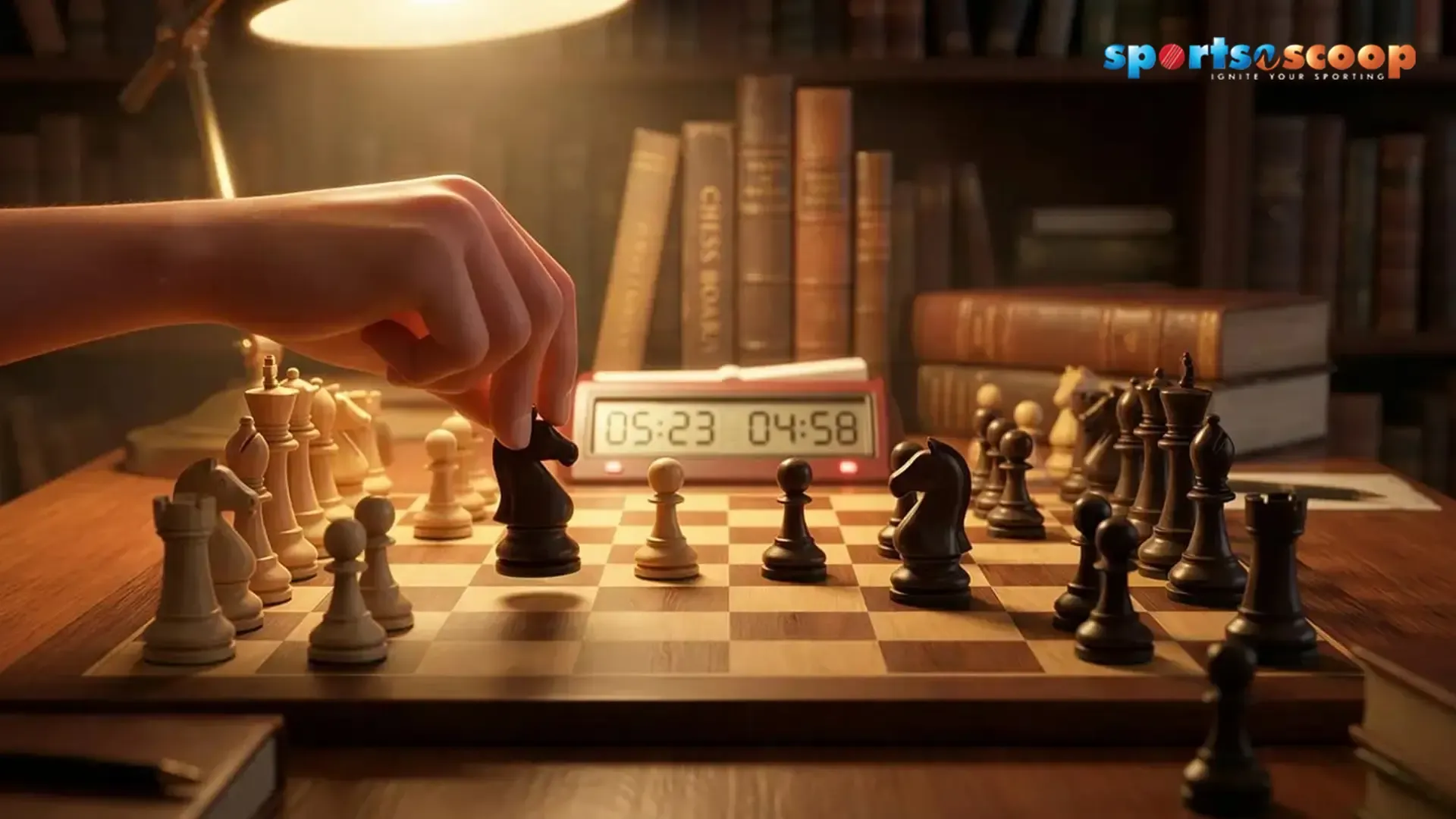
6. Time Management
Some players rush everything. Others burn 10 minutes on move 6. Both are bad and some of the most common chess mistakes.
Time in chess isn’t just a clock; it’s a resource. And misusing it is one of those common chess mistakes that doesn’t feel obvious until you lose on time or panic-blunder.
A pattern you’ll notice:
- Fast in the opening
- Slow in random middlegame positions
- Panic in the endgame
Good players balance it. They do take time, but only when it makes sense. Not necessarily.
Follow the Tips and Master the Game!
You can’t become a Grandmaster if you keep repeating these common chess mistakes. However, you can learn from them and never make it again. Chess is a battle of attrition, and the ones who make the fewest mistakes and play their game properly are the ones who will win the battles. We hope you learned something new from our blog. If you did, be sure to follow us on our socials and never miss an update from SportNScoop.