 By
By The stereotype of darts and billiards being played in dark, smoky pubs is no longer true. These two sports are attracting more players than ever before, with increasing prize money, video views, and new players who were influenced by the online world. Despite expectations that streaming, short videos, and modern technologies would lead to the decline of traditional recreational activities, they are actually reviving them.
The Money Finally Caught up to the Skill
Darts has always demanded genuine precision: arm mechanics, breath control, and the ability to hit a target the size of a coin under pressure. What it lacked, for decades, was money that reflected that skill. The Professional Darts Corporation’s World Championship now carries a total prize fund of £2.5 million, up from roughly £60,000 when the tournament launched in the mid-1990s. That’s more than a 40-fold increase, and it didn’t happen because darts got harder. It happened because broadcasters, sponsors, and promoters finally treated it like a sport worth investing in.
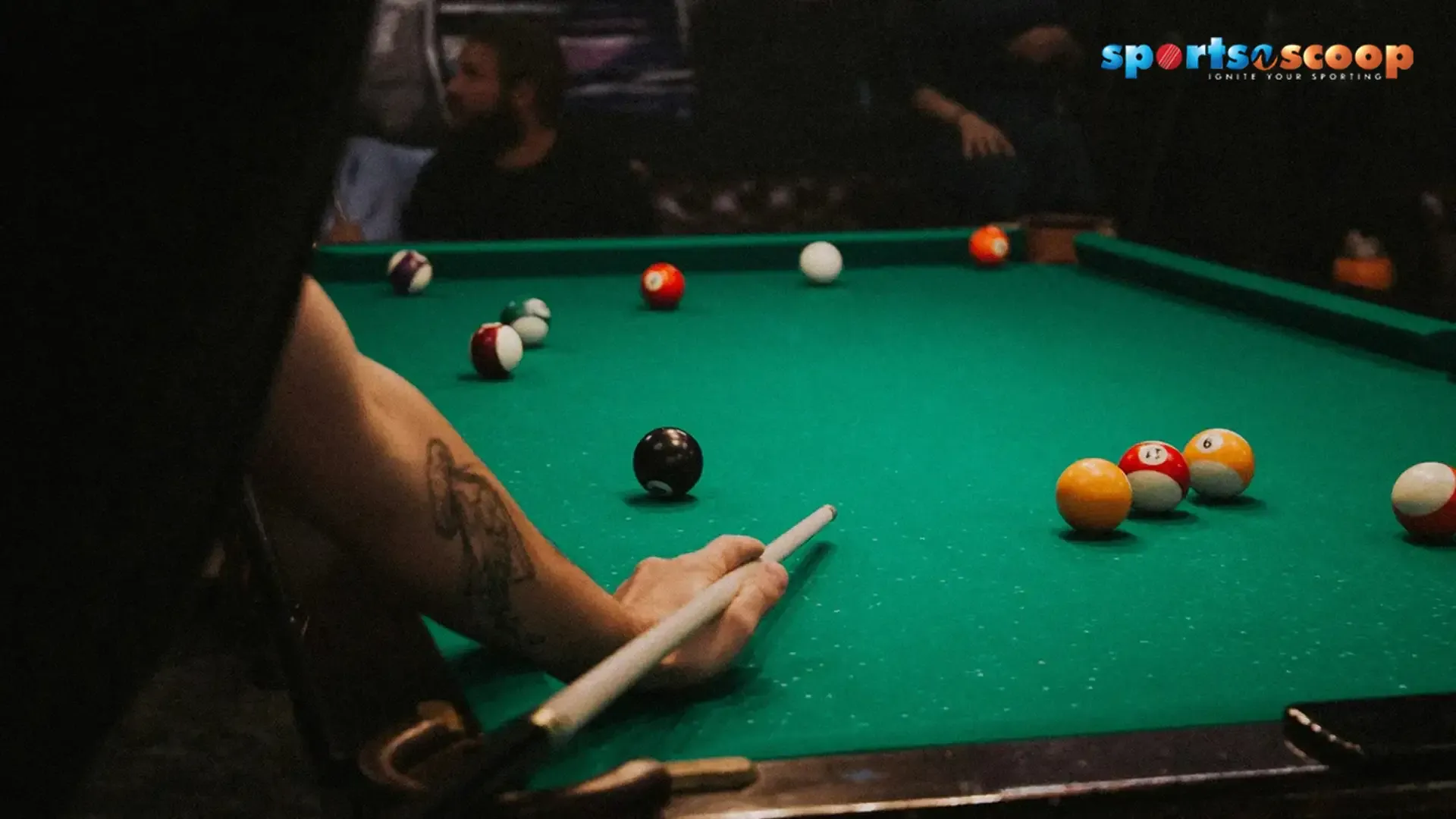
Billiards promoters have taken note. Matchroom Sport, the group behind much of modern darts’ commercial rise, now runs the World Pool Masters and other nine-ball events with the same production values used for major broadcast sports: proper lighting rigs, walk-on entrances, slow-motion replays. Nine-ball has become the discipline of choice for this treatment because it’s fast, visually clean, and easy for a casual viewer to follow even without knowing the rules of a safety shot. The playbook that turned darts into appointment television is being copied almost line for line.
The Retail Flywheel That Keeps it Going
Without quality equipment, the whole renaissance falls apart. Yet it is this segment that is probably the least remarked. As novelty darters become more serious, house-quality darts and battered old cues are insufficient. A market emerges for proper tips, better-balanced cues, tournament-quality boards, and tables constructed to a uniform standard as opposed to whatever a pub has to hand. It is this segment that sustains the game at the local level after the viral video or televised final has been forgotten.
It is also this segment that sustains the specialty retailers. The new devotees who are advancing from barroom kit to the real deal need to have recourse to a retailer who actually knows the types of differences between a soft-tip and steel-tip board or a house cue and a cue weighted for a particular player’s stroke. In Australia that increasingly means turning to a proper dart shop and billiard shop adelaide rather than settling for whatever the local generalist sports retailer happens to have in stock. It is this sort of specialist supply line that turns a viral video into a permanent local industry.
A Teenager, a Record Audience, and a New Demographic
Cash rewards tend to make a sport more serious for the athletes. The audience makes a sport more serious for the rest of the world. Luke Littler’s journey to the final of the 2024 World Championship did both of those things. The British TV viewership peaked at 3.7 million, a number big enough to be taken seriously as a football final, let alone one of darts. It wasn’t just the amount but the shape: younger, more diverse, and overwhelmingly new to the sport’s pub league.
That’s the pattern precision sports need to break out of their old ceiling. A sport built entirely on veteran fans eventually shrinks. A sport that pulls in teenagers watching on a phone, then picks up a set of darts themselves, compounds. Littler’s run did the second thing, and billiards is chasing the same effect with its own breakout stars and higher-stakes formats.
Why a 15-Second Clip Beats a Two-Hour Broadcast
Old-style sports broadcasting relied on fixed programming: either you viewed the full game or you missed it. Precise sports no longer require this model, and it’s a definite strength, not a weakness.
A perfect nine-ball break, a bar player nailing a trick shot off three rails, a 180 thrown under tournament pressure, these are inherently short, visually apparent, and satisfying to watch whether you understand the context or not. Short-form platforms like TikTok and YouTube Shorts have become the discovery engine that traditional TV rights deals never provided. You don’t have to comprehend scoring to appreciate the payoff of a ball dropping cleanly into a corner pocket when you know it should be impossible to sink it there. The video gets shared and re-shared. Some fraction of viewers go looking for a table or a board themselves.
Here’s the surprising part: the sports most commonly associated with slow, archaic play and venues turned out to have the most shareable content in all of rec sport. And they didn’t need the big broadcasters. They started from the bottom up.
The Third Place, Rebuilt For 2025
Sociologist Ray Oldenburg’s idea of the “third place”, somewhere that isn’t home or work, where people gather without much structure, explains a lot about why these venues are thriving again. After a couple of years where socializing happened mostly through a screen, there’s real demand for spaces that are screen-free by design, where the activity is the reason people showed up rather than something playing in the background.
Bars and pubs that treat darts and pool as furniture are losing ground to venues that treat them as the main event. Real leagues, food menus built for a night out rather than an afterthought, and smart-table technology that logs shots, tracks scores automatically, and displays stats on a screen above the table. Auto-scoring apps do for casual players what broadcast graphics do for televised matches: they make the skill visible. A missed shot and a great one both register instantly, and that immediacy keeps people playing longer and coming back more often.
The commercial math backs this up. Leagues bring in repeat customers on a fixed weekly schedule, which is exactly what venue owners want in slower midweek slots. A pub that runs a Tuesday night darts league isn’t just filling seats; it’s building a customer base with a reason to show up regardless of weather or what’s on television.
The Mental Game Nobody Markets
Precision sports like darts and billiards have a wellness component commonly associated with cash prizes and large audiences. Throwing a dart or making a break shot involves narrow, sustained focus similar to what’s found in flow state and motor-skill literature. Breathing regulation, the repetitive nature of the actions, and total absence of external interference while at the line create an almost meditative experience. Of course, any reasonable player would probably tell you that this experience is crowded out by thoughts of hitting the winning shot, and they’d be right. But under all that pressure there is a flow state to be found.
Low Barrier, No Ceiling
Part of the grassroots side of this renaissance is essentially driven by economics. A good dartboard costs less than what you’d spend on a bar tab over a couple of nights. A pool table is a more substantial outlay, but it’s still cheaper than most exercise equipment, and it’ll last decades if you look after it. Pit it against almost any other similar skill pursuit and the sums also seem to add up on a cost-per-hour basis.
That ceiling matters too. You can play darts in a pub for 10 years and still notice yourself getting better at your release and follow through. Cue sports have their own esoteric vocabulary, pool, snooker, and billiards being formally different games played with different tables, balls, and ruleset, and simply detecting that you’re supposed to know the difference is enough to indicate you’re taking the pastime somewhat seriously rather than just messing around with balls. There’s always another level of consistency to master, which is exactly what turns a new hobby back into something interesting after six months.
Who’s Actually Playing Now
The shift in demographics has been larger than many realize beyond the sport. Fallon Sherrock’s darts success placed the grassroots, social level of darts in front of an audience that had not watched a woman compete on the pro stage before and those social leagues have similarly become gender mixed. The simply quickest-growing overall segment of people throwing darts is women and female-friendly facilities are simply best positioned to take advantage of that wave.
It dovetails nicely with the eSports crossover that is also changing who plays the game. Competitive gaming and precision sports have a lot more overlap in their psychology than the average player on either side of the divide realizes: split-second decisions, easily digestible stats, streamed matches with fans following the player more closely than the team. Smart tables with auto-scoring and mobile companion apps essentially deliver a gaming-style interface to a physical sport, which quietly onboards a generation that grew up with scoreboards on a screen rather than chalk on a slate.
Getting in on it
This doesn’t demand the pursuit of a pro career or immediate entry into a league. A board on the wall of the garage, or a table in the spare room, is all the gear you need to get going, and the learning curve is such that regular, rather than raw, talent is what is most quickly and obviously rewarded. Find a nearby outlet that holds a casual night, take a few clips off YouTube to get the basic form, and then put in the practice. The renaissance isn’t really about darts and billiards becoming popular again. It’s about a very, very old kind of face-to-face skill rediscovering a modern distribution system, and that system is only going to keep expanding.