 By
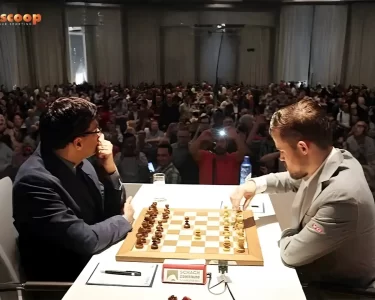
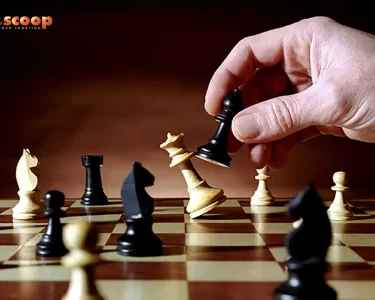
By The air was thin, and two grandmasters were staring into each other’s souls, trying to predict the first move White will play because that will set the tone of the game. All of a sudden, the White reaches out, picks a piece and places it on a new square. One move. And yet, that single move will shape everything that follows. The pawn you post, the knight you leap forward, these are not merely moves. They are the declaration of your intent. The moral is that whether you are a casual weekend player or a seasoned veteran,the best first moves in Chess are among the most fascinating decisions in the game.
This is not just another guide that will ask you to memorise some 20 moves theory. It’s about understanding what your first move does. How it stakes out space, frees your pieces, and signals the kind of game you want to play.
So, What Makes a First Move “Good”?
We don’t have a jack-of-all-trades situation here. That’s because not all first moves are equal. A move that is considered “good” or strong does one or more of the following things:
- It controls Centre Square
- It opens pieces like bishops or queens
- Prepares for the rapid development of minor pieces
You see, the centre is the single most important area of a chessboard. Whoever controls those centre blocks will control the initial phase of the game.
With that in mind, here are the most important and the best first moves in chess, what they achieve, and what kind of game they invite.
1. E4- The Open Game
If there is a move that defines chess as a sharp, tactical game, it’s 1.e4, pushing the ‘e’ pawn two places forward. What it does is open the centre squares for your pieces. On top of that, it also opens the diagonals for your queen and F1 bishop, while having the knight as support. E4 is the rock on which legends like Kasparov and Bobby Fischer made their empires, with the latter calling the move “1.e4—best by test.”
The reply to this move is e5 by Black, which leads to classic open games like the King’s Gambit, Ruy Lopez and Italian opening, some of the best openings in chess. Players can also play C5 brings Sicilian Defence to the play, which is one of the most played and well-studied openings in chess.
2. D4- The Closed Game
Think of D4 as e4’s closely related, but patient and strategic cousin. By pushing the d4 pawn, the one right ahead of your queen, White takes the centre a little differently. However, the thing that makes this one of the best first moves in chess is the fact that, in this case, your d4 pawn is supported by the queen in d1, making it harder to challenge directly. In most cases, the game following the d4 move is slower, more positional and rich in long-term structural themes.
From d4, White can head into the Queen’s Gambit (2. c4), the London System, the Trompowsky, and dozens of other systems. Black’s most popular responses include 1…d5, 1…Nf6, and 1…f5 (the Dutch). D4 is historically associated with deep positional players like Karpov and Petrosian. It’s one of the best opening moves in all of chess, especially if you are a beginner who is just getting the hang of chess.
3. C4- The English Opening
C4, more commonly known as the English Opening, is a quiet move that remains one of the best first moves in chess. Rather than occupying the centre directly, White takes a more measured approach here. White pressures from Flank. Meaning, the Whites’ c4 pawn eyes the d5 square, without planting any piece on e4 or d4 just yet. It’s a hyper-modern approach where White allows Black to build a centre, only to undermine it in the next two moves.
English is famously flexible and a go-to choice for legends like Karpov, Kasparov and Botvinnik, who used it as a strategic weapon. It often transposes into Queen’s Gambit structures after 1…e5 2. Nc3 Nf6 3. Nf3, or leads to independent territory with lines like the Symmetrical English.
4. Nf3- The Reti Move
You play Nf3 when you want something flexible without committing. It develops a piece, controls the e5 and d4 squares and again, commits to absolutely nothing. White can follow up with d4, c4, g3 (fianchettoing the bishop), or even e4, keeping Black guessing and developing its pieces for a more capable, versatile attack later in the game. It’s chess at its finest.
Named after the hypermodern pioneers like Richard Reti, 1.Nf3 leads into the Reti Opening, the King’s Indian Attack, and various transpositions to Queen’s Gambit and English lines. If you want to confuse the bejesus out of your opponent, this is one of the best first moves in Chess. It’s like you are saying, “I know what I am doing” without actually revealing what that is. Kind of neat, right?
5. G3- The King’s Fianchetto
1.g3 isn’t something that you see at amateur levels, but it works the same at every level. White’s idea is to fianchetto the king’s bishop to g2, building a long-term grip on the long diagonal and preparing a kingside castle. It’s slow in terms of central occupation but creates a resilient setup that’s hard to crack.
From g3, White often follows up with Bg2, d3 or d4, Nf3, and 0-0, entering a King’s Indian Attack-type structure or the Catalan. It invites calm, manoeuvring games. Not the most forcing chess first move, but quietly effective, especially against opponents who expect sharper fare.
6. F4- Bird’s Opening
This one is a doozy. It’s one of those openings that depend solely on how your opponent takes it. By advancing the f pawn, White signals intent to control e5 and build a kingside attack. However, the downside is that your Kingside is also weak, and the e4 square is vulnerable, which can be an opportunity for Black. But it leads to interesting and unbalanced games where unprepared players will never see the light of day.
This is one of the best first moves in chess for White, and Black responds by 1.e4, the From’s Gambit, which immediately challenges White’s setup. Although the Bird isn’t an opening that is utilised much in competitive play, it’s used in club matches, where it can produce some unforeseen outcomes and make for a fun game to watch.
From First Move to Openings, How One Step Shapes Everything
The very first move in Chess isn’t played in isolation. Rather, it’s the stepping stone to something much more complex. Here are some of the best openings in chess that spring from the best first moves in chess.
- Ruy López (Spanish Opening) — From 1. e4
- Sicilian Defence — From 1. e4
- Queen’s Gambit — From 1. d4
- King’s Indian Defence — From 1. d4(typically with 2. c4 )
- English Opening — From 1. c4
- Réti Opening — From 1. Nf3
- London System — From 1. d4
Your First Move, Your Signature
Chess is endlessly deep with millions of possible moves. So, there isn’t really a “best” under all circumstances. The best first move in Chess is ultimately the one that makes the most sense to you, based on your playing style and theoretical knowledge. E4 suits those who crave fire and tactics. D4 rewards patience and strategic vision. C4 and Nf3 speak to those who value flexibility over force.
Before any theory takes over, before any engine evaluation kicks in, there is a moment of pure human intention. And in that moment, the whole game opens up. These first moves just get you a step closer. That’s it.