 By
By India is home to some of the biggest cricket stadiums in the world. This is one of the reasons why you have a ton of “biggest stadium in India” lists. But what about the smaller ones? Are we not going to recognise their contribution? We will. In this blog, we will find out which is the smallest cricket stadium in India. How small is it in terms of boundary length and overall playing area? Has it hosted international matches, and does its size influence scoring patterns?
The size of a cricket stadium is not just about seating capacity. It also includes boundary dimensions and match setup, both of which can significantly impact how a game unfolds. Shorter boundaries often lead to more sixes, higher totals, and fast-paced contests that keep fans on the edge of their seats.
Discover the 5 Smallest Cricket Stadium in India
Many cricket stadiums in India are not just venues for domestic matches. But it also serves as a key location for major tournaments like the IPL. These grounds act as home grounds for IPL teams. Several memorable matches and records have been created over the years. This strong connection between stadiums and teams adds more excitement for fans following IPL matches. Let’s explore each of them in detail-
1. Holkar Cricket Stadium, Indore
Holkar Cricket Stadium is known for having one of the smallest ground boundaries in India, especially on the square end, where the shortest square boundary can be as little as 56 meters. As a result of its small boundary, it is easier for players to clear the ropes on this ground, especially with variations such as spin and pace that come up in the slot. This ground has a quick outfield, ensuring that shots made can cross the boundary fence. In limited-overs cricket, Indore has witnessed some high scores.
2. M. Chinnaswamy Stadium, Bengaluru
One of the smallest cricket stadium in India, with its square boundaries ranging between 60 and 64 meters. Though marginally larger than Indore, it remains one of the smallest playing grounds in India. The elevation of the ground and the short length of its boundaries facilitate sixes easily. The ground is well known for producing high-scoring IPL matches. Scores in excess of 190 are also no guarantee of victory at this ground. The wicket generally provides carry to help stroke players. Bowling becomes tough during the death overs since even mis-hits go out of the boundary.
3. Wankhede Stadium, Mumbai
Featuring square boundaries around 60 to 65 meters. Wankhede Stadium, being the smallest among the three stadiums, is also another hitter’s paradise. The sea breeze helps swing the ball at times when the ball is new, but once it loses its hardness, batting gets easier owing to its regular bounce, known for several chase matches in both IPL and international games. Due to smaller side boundary dimensions, the batter focuses on hitting one specific side depending on the positioning of the fielders.
4. Arun Jaitley Stadium, Delhi
Arun Jaitley Stadium has square boundaries measuring approximately 64-65 meters. Makes it stand in the list of the smallest cricket stadium in India; however, it does offer good strike zones, especially if the ball is bowled on a flat trajectory. Historically, the spinners from Delhi have had an advantage due to the pitch, but in the last few years of IPL cricket, the pitches have been more even. Due to the short square boundaries, sweep and slog sweeps become attractive strokes to play.
5. HPCA Stadium, Dharamshala
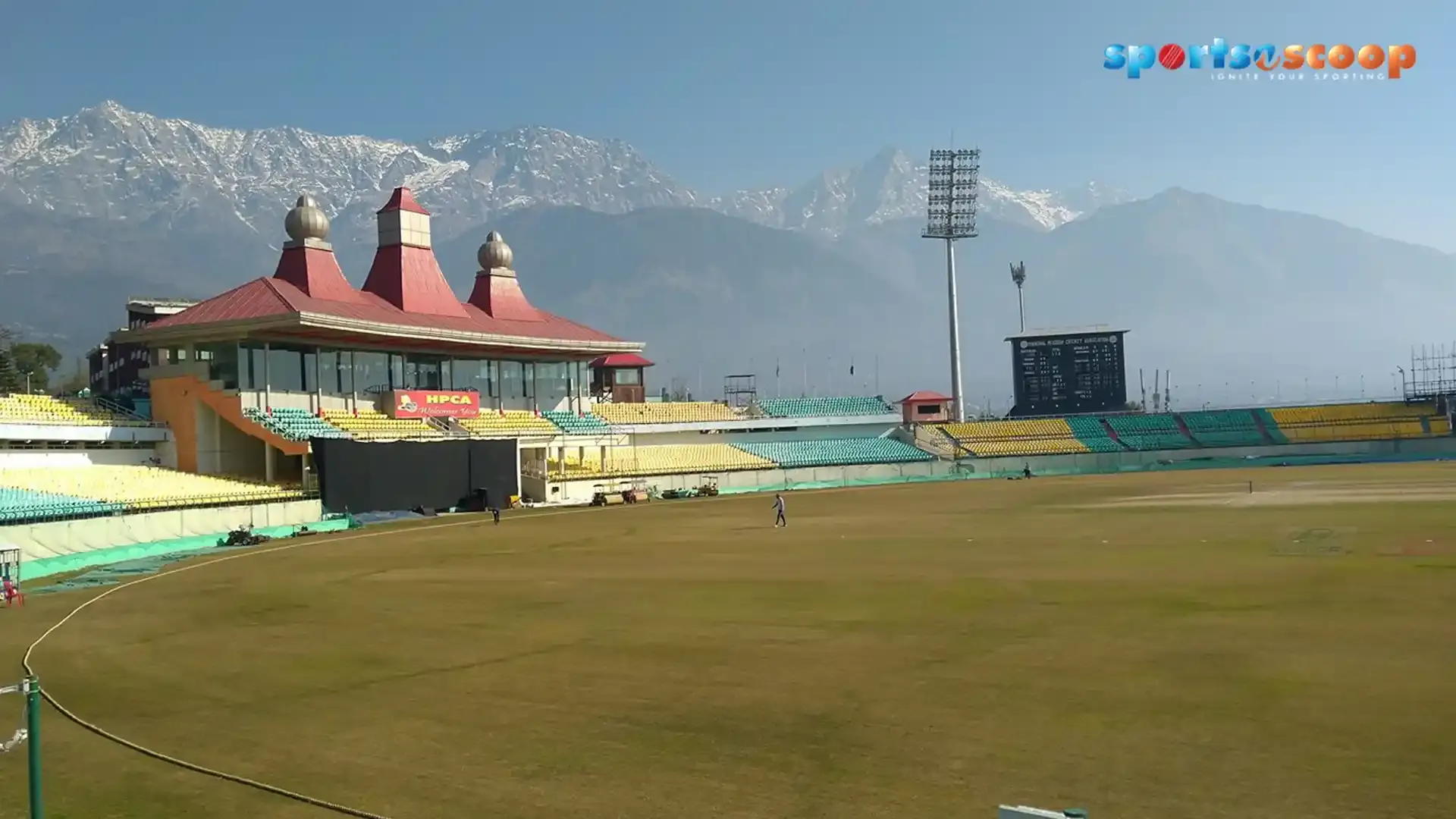
Surrounded by snow-capped mountains, the HPCA Stadium in Dharamsala is considered one of the smallest cricket stadiums in India. The stadium is rectangular, measuring 63 to 65 meters in length, shorter than most international stadiums. Nonetheless, the stadium pitch is relatively large and square, providing different conditions for batters. Besides being known for its scenic location and playing ground, fast bowlers receive an edge due to the climatic conditions.
From the Dimensions to the Creation of History
The debate over the smallest cricket stadium in India often highlights how compact dimensions can transform a standard match into an adrenaline-fueled spectacle. As we’ve explored, venues like Indore’s Holkar Stadium and Bengaluru’s M. Chinnaswamy Stadium prove that a stadium’s impact isn’t defined by its seating capacity, but by the pressure its short boundaries place on bowlers. Whether it’s the higher altitude of Dharamshala, whether it’s the high-altitude thin air in Dharamshala, or the sea-level swing at the Wankhede, each smallest cricket stadium featured in this guide offers a unique tactical challenge. Understanding the layout of the smallest cricket stadium in India helps fans appreciate the technical nuances of the game from the choice of a sweep shot in Delhi to the reliance on raw pace in Indore. While India boasts massive colosseums like Ahmedabad, these intimate grounds remain the heart of high-scoring drama.
FAQ’s
Is Chinnaswamy a small ground?
Which are the 3 biggest stadiums in India?
Smallest cricket stadium in the world?
Which is the smallest cricket Stadium in India by boundary IPL?
The biggest cricket Stadium in India by boundary