 By
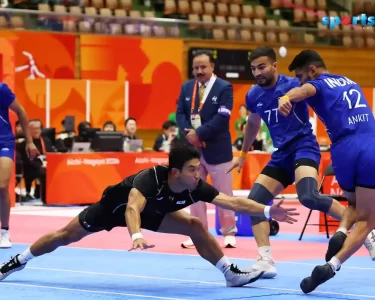
By Kabaddi is one of the most thrilling traditional games played in India and across other nations. Whether you are a student, a coach, an event organiser, or just a kabaddi fan, it is important that you know about the correct kabaddi court size. However, learning the proper measurement of a kabaddi court is crucial for fair competition, player safety, and adherence to official rules.
In this blog, we will discuss everything related to the size of a kabaddi court. This includes kabaddi ground measurement, standard kabaddi court size in metres and feet.
What is the Standard Kabaddi Court Size?
The standard kabaddi court size depends on the level of the players. For instance, small-level tournaments don’t always follow the international standards. In general, there are some differences in court size for senior men, women, and junior players.
For senior men, the actual court size of the kabaddi game is:
- 13 metres×10 metres
For women and junior players, the actual court size is:
- 12 metres×8 metres
These measurements follow the standards set by the Amateur Kabaddi Federation of India (AKFI) and the International Kabaddi Federation (IKF), and are used in national competitions and international tournaments. The Pro Kabaddi League, India’s premier domestic league, also follows these court dimensions.
Kabaddi Court Size in Metres
Most of the tournaments measure the kabaddi court size in metres.
Senior Men’s Court
- Length: 13 metres
- Width: 10 metres
Women and Juniors’ Court
- Length: 12 metres
- Width: 8 metres
The court is divided into two halves, with each team occupying one side. Moreover, there are important markings such as the baulk line, bonus line, and midline that help control gameplay.
Important Lines in a Kabaddi Court
A kabaddi ground is much more than a rectangular court with a bunch of rules players have to follow. There are several lines marked to indicate the rules and the playing area.
1. Midline
The court is divided into two equal parts by the middle line. The raider has to cross that middle line to enter the opponent’s side.
2. Baulk Line
The baulk line is drawn in each half of the court. A raider must cross the baulk line during a raid; failing to do so without being touched results in an unsuccessful raid and a point awarded to the defending team.
3. Bonus Line
The bonus line is located beyond the baulk line in each half. A raider earns a bonus point by crossing the bonus line with one foot raised, provided at least six defenders are present on the court at the time of the crossing.
4. Lobby Area
The lobby is built on both sides of the court and operates only when there is contact between players.
To maintain the structure and discipline of the game, these elements are very important.
Kabaddi Ground Measurement for Local Matches
Although people sometimes adjust the size of the playing area for local matches or school tournaments based on the available space, the standard kabaddi court size is always preferred because it provides a professional playing experience.
If space is limited, ensure:
- The court remains symmetrical
- Safety space is available around the ground
- Proper markings are visible
- Surface is soft and even
Modern kabaddi is played on synthetic mats for safety, as mud courts were the traditional setting, and people often sustained more injuries there.
Why do Correct Kabaddi Court Dimensions Matter?
Using accurate kabaddi court dimensions is important for several reasons:
1. Fair Gameplay
Standard measurements ensure that both teams play under equal conditions.
2. Better Training
Players preparing on official-size grounds perform better in competitions.
Professional defenders especially rely on proper court spacing and positioning to stop raiders effectively. You can learn more about some of the greatest Pro Kabaddi defenders and how they use court dimensions to their advantage during matches.
3. Safety
Proper spacing reduces injuries and collisions.
4. Professional Experience
A correctly marked court gives players confidence and improves the overall quality of the game.
Tips for Marking a Kabaddi Ground
If you want to prepare a kabaddi court yourself, follow these simple tips:
- Use a measuring tape for accurate dimensions
- Mark lines with chalk or lime powder for a perfect kabaddi court size
- Keep the surface flat and clean
- Leave extra space outside the boundaries for player movement
- Double-check measurements before matches begin
Proper preparation improves the playing experience for everyone involved.