 By
By Striking down pins is a global passion today. But did you know this sport dates back thousands of years? The history of bowling links ancient religious rituals, royal bans, and modern technology. Today, millions of players step onto slick lanes worldwide to let off a little steam. Let’s roll back the clock to discover how a simple game of accuracy evolved into a massive global phenomenon.
Ancient Origins: How the History of Bowling Began
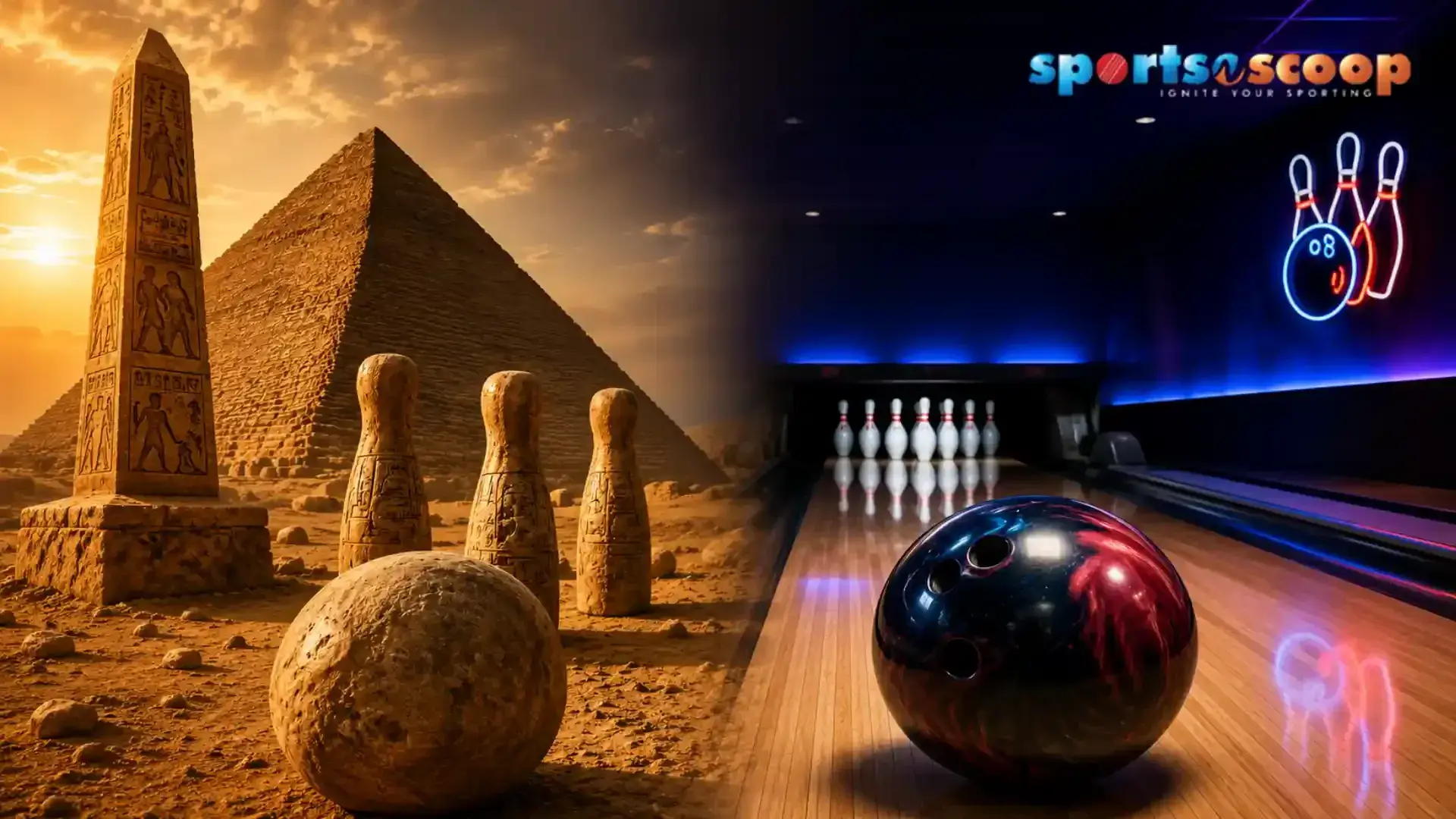
The true bowling history starts much earlier than most people realise. In the 1930s, British anthropologist Sir Flinders Petrie discovered primitive bowling equipment in an ancient Egyptian tomb. The items date back to 3200 BC and feature crude stone balls and matching pins. This proves that humans have enjoyed knocking things down for over 5,000 years.
Meanwhile, the Roman Empire developed its own variation. Roman soldiers threw stones as close as possible to a target object. This specific game evolved over centuries, eventually becoming modern lawn bowls and bocce.
From Holy Rituals to Outlawed Royal Pastimes
By the 3rd century AD, Germany added a unique spiritual twist to the history of bowling. Parishioners rolled a stone ball at a wooden club called a kegel. The club represented a demon or a sin. Knocking it down symbolised cleansing oneself of sins. To this day, professional bowlers are still frequently called “keglers.”
As the game transitioned from churchyards into local taverns, its popularity exploded across Europe. By the 14th century, it became a major distraction. King Edward III actually banned the sport in England because soldiers were playing it instead of practising archery. Despite royal pushback, the game survived in hidden spaces and dark alleys.
The Birth of the American Bowling Alley
European settlers brought their favourite pin games to North America during the colonial era. Dutch settlers loved playing “ninepins” in New York. However, gambling quickly plagued the sport. To bypass strict anti-gambling laws targeting ninepins, clever business owners added a tenth pin. This changed the game’s structure from a diamond to a triangle.
This legal loophole sparked a massive indoor revolution. Operators began building dedicated indoor venues, establishing a vibrant bowling alley history in urban neighbourhoods. In 1895, the American Bowling Congress was formed to standardise equipment weights, ball sizes, and scoring rules nationwide.
Splitting the Eras: Historical vs. Modern Bowling
The history of bowling reveals an incredible technological transformation. The game our ancestors played looks drastically different from the high-tech sport we play today. Here’s a differentiation between them.
| Feature | Historical Bowling | Modern Bowling |
| Ball Composition | Lignum vitae wood or heavy stone | Reactive resin, urethane, and plastics |
| Pin Setting | Human “pinboys” resetting lanes manually | High-speed automated pinspotters |
| Lane Surface | Unregulated outdoor grass or rough wood | Synthetic lanes coated with complex oil patterns |
| Scoring | Handwritten tallies on paper sheets | Fully automated digital scoring monitors |
Ancient players relied entirely on physical muscle and basic geometry. Modern bowlers utilise advanced physics. Today’s reactive resin balls are engineered with asymmetrical weight blocks inside. This allowed players to hook the ball sharply into the pocket. Additionally, modern oil patterns on lanes create highly strategic playing conditions that require constant physical adjustments.
Safety and Accessibility in Modern Play
As the sport grew, physical safety became a priority. Early balls lacked finger holes, causing hand strain. The introduction of rubber-plastic blends reduced wrist injuries. Today, ergonomic fitting ensures players of all ages can enjoy the game safely.
You Might Also Like- Level Up Your Fitness With the Best Resistance Bands
The Unstoppable History of Bowling
Understanding its history helps us appreciate the sport’s deep cultural roots. It survived ancient bans, adapted to legal hurdles, and embraced massive technological shifts. The core joy of securing a perfect strike remains exactly the same as it was centuries ago. The longer its history proves that this timeless sport will continue to thrive for generations to come.